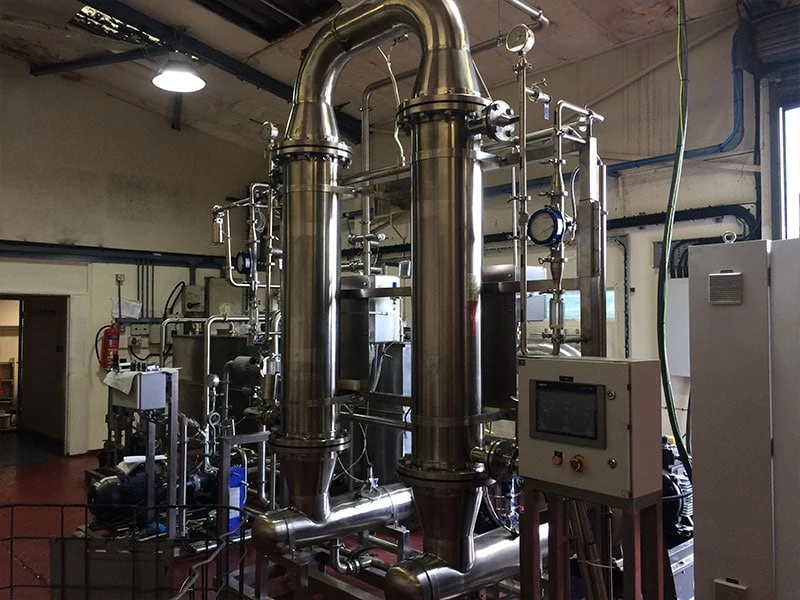
Hydrogen Pipework Fabrication Services

Miles of Pipework made
Over 1
Clients
Over 1

established for 20+ years

1

We provide hydrogen pipework fabrication services for industrial projects across the UK. We manufacture bespoke pipe spools, welded assemblies, manifolds, flanged connections and equipment pipework using our workshop fabrication, coded welding and installation capabilities. Hydrogen systems require careful control of material compatibility, welding quality, pressure integrity, leak tightness and internal cleanliness.

Our team works from approved drawings and technical requirements, reviewing the material grades, welding procedures and inspection requirements before fabrication. Our industrial pipework fabrication services cover new installations, plant modifications and replacement sections, with workshop prefabrication to help reduce on-site work. Our pipework fabrication services also include fabrication to approved drawings for existing industrial infrastructure.
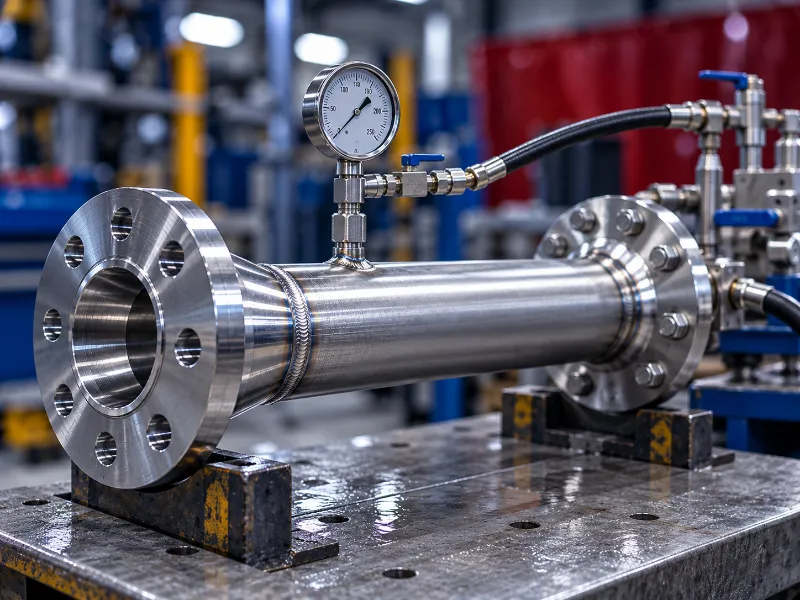
Hydrogen Pipework Fabrication for Production and Distribution

We fabricate industrial hydrogen pipework and equipment connections to approved drawings for projects involving electrolysers, gas purification, compressors, process skids, storage and distribution headers. Refuelling stations require high-pressure pipework for dispensing, while hydrogen blending into natural gas grids requires assessment of existing materials and joints.

Hydrogen is used in chemical and petrochemical processing for hydrotreating and hydrocracking. Produced using renewable electricity, it can act as a low-carbon energy carrier supporting the UK’s net-zero objectives.

System design must account for pressure, temperature, cycling and purity. High-purity hydrogen can require stringent internal cleanliness, protected ends and contamination checks; some systems specify cleanroom fabrication. Liquid hydrogen introduces further vacuum and cryogenic considerations. We agree any specialist cleaning or fabrication requirements at the specification stage, so the scope is clear before work begins.

Why Choose KEE for Hydrogen Pipework Fabrication?

  • Workshop manufacturing: Bespoke pipe spools, flanged assemblies, manifolds and supports made to approved drawings.
  • Coded welding: Stainless steel and carbon steel welding under applicable WPS and welder qualifications.
  • Installation support: Fabrication and site work coordinated around existing plant and planned shutdowns.
  • Inspection and testing: Visual and dimensional inspection, hydrostatic testing and arranged specialist NDT.
  • Quality records: Material traceability, weld mapping and manufacturing documentation defined in the inspection and test plan.
  • Specification-led delivery: Our team can discuss constructability, connections, lifting requirements and delivery sequences.

Stainless Steel Materials and Hydrogen Embrittlement

Hydrogen embrittlement can reduce the ductility, toughness and fatigue resistance of susceptible metals. Hydrogen’s small molecular size increases demands on welded joints, seals and leak testing. Conventional industrial pipework is not automatically suitable for hydrogen service.

ASTM A312 TP316L stainless steel is specified for some hydrogen applications. We can fabricate 316L pipework to approved drawings where the welding procedures and inspection requirements are suitable for the project. Carbon steel and other stainless steel grades may be suitable when the designer has considered pressure, temperature, gas purity, fatigue and hydrogen exposure.

Coded Welding, Prefabrication and Traceability

We fabricate hydrogen pipework in stainless steel and carbon steel, using controlled joint preparation, fit-up and coded welding. Our capabilities include TIG (GTAW), with shielding and purge control where specified. A qualified Welding Procedure Specification (WPS), supporting Procedure Qualification Record (PQR/WPQR) and coded welder approvals must match the joint configuration, material and thickness.

BS EN ISO 9606 addresses welder qualifications, while BS EN ISO 15614-1 and ASME Section IX cover the relevant welding procedure and personnel requirements. Hydrogen service may need additional examination, cleanliness and fatigue controls. Material heat numbers and weld identification can be linked to procedures and welder continuity records.

Our prefabricated pipework service allows pipe spools, manifolds, flanged connections and supports to be fabricated and checked in the workshop before dispatch. This can reduce on-site welding, while final joints remain subject to the agreed inspection and testing.

Pressure Testing, Inspection and Quality Assurance

Hydrogen pipework requires an inspection and test plan (ITP) defining hold points and acceptance criteria. We carry out visual and dimensional inspections and suitable hydrostatic pressure testing in-house. We arrange specialist radiographic and ultrasonic non-destructive testing (NDT) through external providers where the specification requires it.

Hydrostatic pressure testing verifies pressure integrity, while helium leak testing or other specified methods address additional leak tightness. Test pressure, medium and witnessing depend on the approved design procedure. Very high-pressure hydrogen systems may require specialist testing above 1,000 bar. That is not part of our stated in-house testing capacity, but we can coordinate specialist testing arrangements where required.

The handover package can include material certificates, heat-number traceability, weld maps, WPS/PQR records, welder approvals, inspection and pressure-test certificates. High-purity systems may also need cleaning and end protection.

Hydrogen Pipework Standards and Compliance

ASME B31.12 is a recognised standard for hydrogen piping and pipelines. ASME B31.3 covers process pipework and may be specified for particular hydrogen applications. The applicable editions, materials, welding qualifications, inspection requirements and acceptance criteria must be established by the project’s design authority. ASME Section IX and BS EN ISO 15614-1 address welding qualification, rather than automatically certifying a complete system.

For installations in the UK, applicable pressure equipment requirements and the Pressure Systems Safety Regulations 2000 must be considered by those responsible for the system. Where a project is supplied to the European market, requirements under the Pressure Equipment Directive 2014/68/EU (PED) may apply. The applicable pressure equipment category or conformity assessment route depends on the actual system, not simply the use of hydrogen.

KEE Engineering Experience and Credentials

Established in 2006, we’ve built our service around workshop fabrication, coded welding and site installation and maintenance across the UK. Our project six-inch industrial gas main project shows how we fabricated flanged pipe spools and integrated them with existing infrastructure. This was an industrial gas installation, not a hydrogen project.

Our credentials include ISO 9001, ISO 14001 and ISO 45001 management system certification, alongside City & Guilds, IPAF and WIAPS qualifications or registrations. We confirm the applicable certification scope, welding qualifications and inspection requirements for each project rather than assuming these credentials cover every hydrogen application.

Hydrogen Pipework Fabrication Specifications

To help us assess your fabrication requirements, send the available project information below. We’ll agree the manufacturing, inspection and documentation scope against your drawings and specifications.

Specification Information to Provide
Design code Applicable ASME B31.12 or ASME B31.3 edition, or another approved design basis
Pipe material Approved grade such as ASTM A312 TP316L where specified, with material traceability
Assembly Pipe sizes, wall thicknesses, flanges, valves, manifolds, supports and connections
Welding Approved WPS and PQR/WPQR, welder qualifications, weld maps and any purge requirements
Inspection Visual inspection, NDT, hydrostatic test procedure and any additional leak tests
Documentation Material certificates, inspection reports, test records and agreed handover documents

Pipework fabrication starts with mechanical design drawings, including isometric drawings, process and instrumentation diagrams, pipe classes and equipment connections. Your design engineer specifies the materials, pressure and inspection criteria, then we confirm the fabrication and installation scope.

Hydrogen Pipework Fabrication FAQs

Can You Prefabricate Hydrogen Pipe Spools?

Yes, where the materials, welding qualifications, transport arrangements and inspection requirements are confirmed. We can prefabricate suitable pipe spools in our workshop to reduce on-site welding. Final site joints still need the specified inspection and testing.

What Documentation Is Needed?

Depending on the project, documentation may include material certificates, traceability records, qualified welding procedures (WPS and PQR/WPQR), weld maps, examination reports, inspection records and pressure-test or leak-test reports. We agree the required documentation as part of the project specification.

Can You Fabricate 316L Stainless Steel Hydrogen Pipework?

Yes. We fabricate stainless steel pipework and can review hydrogen projects specifying ASTM A312 TP316L. The applicable welding qualifications, joint design and inspection plan must be suitable for the intended hydrogen duty.

What Pressure Test Will Be Used?

The test pressure and method are defined by the approved design code and project specification. We provide suitable hydrostatic testing in-house and can coordinate additional specialist leak testing or external inspection where required.

Discuss Your Hydrogen Pipework Project

Contact our team with drawings, pipe class, material requirements, design pressure and temperature, hydrogen purity, applicable standards, inspection criteria and programme. We can discuss our pipework fabrication services, coded welding, installation and testing responsibilities before quoting. Provide any relevant design calculations or operating-cycle requirements with the enquiry.

We use cookies to give you the best online experience. By agreeing, you accept the use of cookies in accordance with our cookie policy. If you do not accept cookies, our website may not display or function correctly.

Privacy Settings saved!
Privacy Settings

When you visit any web site, it may store or retrieve information on your browser, mostly in the form of cookies. Control your personal Cookie Services here.

These cookies are necessary for the website to function and cannot be switched off in our systems.

In order to use this website we use the following technically required cookies
  • wordpress_test_cookie
  • wordpress_logged_in_
  • wordpress_sec

Decline all Services
Accept all Services