Material selection is fundamental to the integrity of gaseous hydrogen pipework. A grade suitable for conventional process systems may require further assessment when exposed to hydrogen, particularly where operating pressure, repeated pressure cycles or welded joints introduce additional risks.
This guide explains how stainless steel and carbon steel behave in hydrogen service, the importance of hydrogen embrittlement, and what UK engineering teams should establish before fabrication.
Key Takeaways
- 316L and 304L stainless steels are common candidates for gaseous hydrogen pipework, but neither grade is universally suitable.
- Carbon steel can be used in certain hydrogen applications, provided the specified grade, strength, welds and operating conditions have been assessed.
- Hydrogen embrittlement and fatigue can affect material performance, particularly at stressed areas and welded joints.
- Material selection, welding, inspection and testing must follow the project’s approved design and applicable standards.
What determines material suitability for hydrogen pipework?
Hydrogen compatibility depends on the complete operating conditions, not simply whether a material is described as stainless steel or carbon steel.
A competent design engineer should consider:
- Hydrogen concentration and partial pressure
- Minimum and maximum operating temperatures
- Gas purity, moisture and possible contaminants
- Pressure fluctuations, vibration and expected service life
- Material grade, manufacturing condition and weldability
- External corrosion conditions and joint requirements
These factors influence both the material selected and the acceptance criteria applied during fabrication.
This article concerns gaseous hydrogen within industrial pipework. Liquid hydrogen systems operate at cryogenic temperatures and require separate material and design considerations. Likewise, hydrogen introduced during welding is a different exposure mechanism from hydrogen contained within a pipe during service.
Hydrogen embrittlement and hydrogen induced cracking
Hydrogen embrittlement occurs when hydrogen enters a susceptible metal and reduces its ability to deform or resist cracking. Hydrogen molecules at the metal surface may dissociate into hydrogen atoms, allowing atomic hydrogen to enter metals and diffuse through their microstructure. Hydrogen absorption and local stresses can affect grain boundaries, defects and crack tips. The mechanisms and severity depend on the material and exposure conditions.
The consequences may include tensile ductility loss, reduced fracture resistance and faster crack growth under repeated loading. Susceptibility varies with material composition, strength, hardness, microstructure, stress and hydrogen exposure.
Three mechanisms should not be confused:
- Embrittlement in service: hydrogen entering the material during operation can contribute to cracking under stress.
- Hydrogen-assisted cold cracking: hydrogen introduced during welding, combined with susceptible microstructures and stresses, can cause cracking after fabrication.
- High-temperature hydrogen attack: a separate degradation process affecting certain steels under sufficiently severe temperature and hydrogen pressure conditions.
The distinction matters because each requires different material, welding or inspection controls. Hydrogen induced cracking must also be interpreted in context: mechanisms in sour service, where hydrogen sulphide can promote hydrogen charging, differ from damage under dry high-pressure gaseous hydrogen. A project assessment should distinguish these conditions rather than applying one generic prevention rule.
Stainless steel for hydrogen pipework
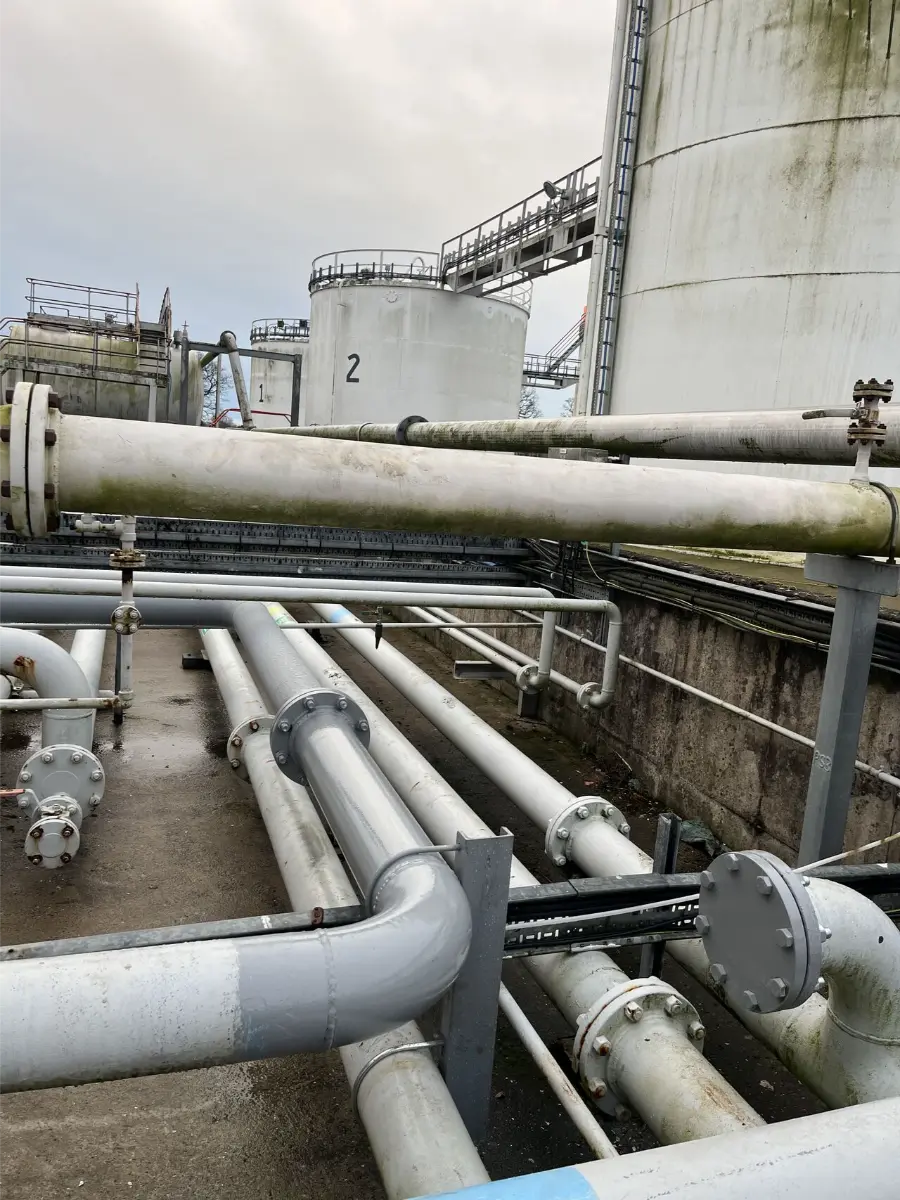
316L and 304L austenitic stainless steels
Austenitic stainless steels are often considered for gaseous hydrogen applications because they can offer favourable ductility, toughness and resistance to hydrogen-assisted degradation compared with many higher-strength steels.
316L and 304L are commonly evaluated. Their alloying elements and degree of cold work can affect austenitic stability and performance. Their suitability depends on the particular specification and product form, as well as the expected pressure, temperature and mechanical loading.
Relevant considerations include:
- Microstructure: the stability of the austenitic structure can influence hydrogen-related performance.
- Cold working: deformation during manufacture may change material properties and susceptibility.
- Welding: filler metal, heat-affected zones and approved procedures must be considered alongside the parent material.
- Corrosion: the surrounding process and external environment still determine corrosion resistance requirements.
316L may offer advantages for certain applications, but it should not automatically replace 304L or be described as universally hydrogen-compatible. Material certificates and the design specification must establish the approved grade and condition.
Other stainless steels and alloys
Not all stainless steels behave alike. Duplex stainless steels, martensitic and precipitation-hardened grades have different microstructures and mechanical properties, which can affect their susceptibility to hydrogen-assisted cracking.
Specialist nickel-based alloys may be considered where additional temperature or corrosion demands justify them. Their use must be supported by appropriate service-specific evidence rather than a general assumption that higher alloy content means better hydrogen compatibility.
Can carbon steel be used for hydrogen pipework?
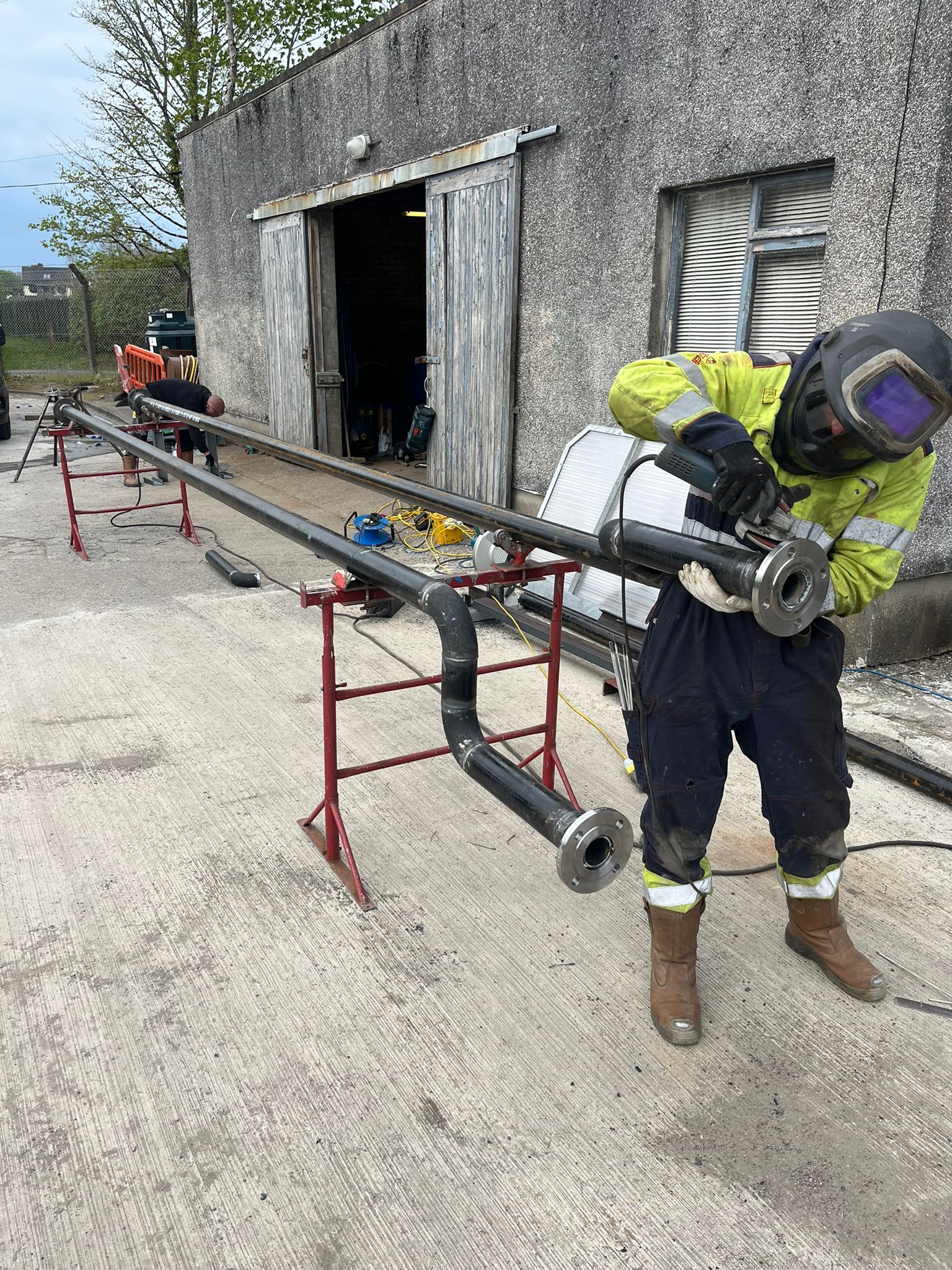
Yes, under defined conditions. Carbon steel remains a potential option for certain gaseous hydrogen systems, including some industrial plant pipework and transmission applications. It is not automatically unsuitable because the service contains hydrogen.
However, the designer must assess:
- Specified grade, yield strength and fracture toughness
- Hydrogen concentration and partial pressure
- Pressure cycling and anticipated fatigue behaviour
- Weld and heat-affected zone hardness
- Material chemistry, manufacturing route and traceability
- Applicable code limits and project-specific acceptance criteria
Higher-strength steels may present greater challenges with hydrogen-assisted cracking. Lower-strength grades can offer advantages in some applications, but there is no universal grade or hardness threshold suitable for every project.
Process plant pipework, hydrogen transport networks and long-distance hydrogen transmission pipelines may operate under different design provisions. Existing natural gas pipelines cannot be assumed suitable for hydrogen blends without assessing materials, welds and service history. A material accepted for one system should not be transferred to another without engineering review.
Welding, heat-affected zones and hydrogen cracking
Material selection does not end with the pipe itself. Weld metal, heat-affected zones and joint geometry can influence performance because welding changes local microstructure and creates residual stresses.
During fabrication, hydrogen from consumables or moisture can contribute to delayed cold cracking in susceptible steels. During operation, hydrogen exposure may affect the behaviour of stressed welded joints.
Controls can include:
- Qualified welding procedure specifications (WPS) and procedure qualification records (WPQR)
- Appropriate consumables and storage arrangements
- Preheat and interpass temperature control where specified
- Dimensional fit-up, weld profile and alignment checks
- Hardness measurements and non-destructive testing where required
Post-weld heat treatment may be specified for certain materials and conditions, but it is not a universal requirement for all hydrogen pipework.
Welding requirements must be established from the approved code and project specification before work begins.
Pressure cycling, fatigue and crack initiation
Hydrogen systems may experience repeated pressure changes during operation, start-up and shutdown. These loading cycles matter because hydrogen exposure can increase fatigue crack growth rates in susceptible materials.
Weld toes, branch connections, misaligned joints and poorly supported pipework can create local stress concentrations. Design and fabrication should therefore consider joint geometry, fit-up, pipe supports and vibration, alongside the material’s hydrogen-specific fatigue behaviour.
For demanding applications, the designer may require additional fracture-mechanics assessment or targeted inspection. Conventional fatigue data measured in air should not automatically be assumed to represent performance in hydrogen environments. For high pressure hydrogen, fatigue and fracture assessments may require suitable test evidence for the precise grade and operating cycle.
Fittings, seals and valves in hydrogen service
An appropriate pipe material does not guarantee the suitability of the complete system, particularly when stress concentrators occur at joints or fittings. Connections, valve internals, gaskets and seals must also be assessed.
Metallic components require compatible materials and suitable mechanical properties. Non-metallic seals may be affected by hydrogen permeation, pressure cycling or decompression behaviour, even though they do not experience metallic hydrogen embrittlement.
Welded joints or suitable hydrogen-rated connection systems may be specified to manage leakage risk. The final selection depends on the design, service conditions and component manufacturer’s documented suitability.
Hydrogen embrittlement testing, inspection and traceability
Hydrogen embrittlement testing may include laboratory assessment of fracture toughness or fatigue crack growth in representative hydrogen conditions. These specialist tests are not interchangeable with routine production weld inspection, and their necessity is determined by the design authority.
For fabrication contractors, material traceability connects the approved design to the components actually installed.
Depending on project requirements, documentation may include:
- Material certificates, grades, heat numbers and product specifications
- Weld maps, approved WPS/WPQR records and welder qualifications
- Dimensional inspection and visual examination
- Specialist non-destructive testing records
- Hardness or heat-treatment records where applicable
- Pressure and leak-testing documentation defined by the design authority
The inspection and test plan should identify acceptance criteria and any required hold points. A hardness survey or visual examination alone cannot establish complete hydrogen compatibility. Specialist methods such as radiography or ultrasonic testing may be coordinated with qualified external providers where specified.
ASME B31.12, ASME B31.3 and UK requirements
ASME B31.12 addresses hydrogen piping and pipelines within its defined scope. ASME B31.3 addresses process piping and may be relevant to hydrogen projects where specified. Their roles and applicable editions must be assessed against the actual installation rather than treated as interchangeable or universal approvals.
For buried steel pipelines, designers may additionally consider cathodic protection: excessive cathodic charging can introduce hydrogen from the external metal surface. That is a separate pathway from exposure to internal hydrogen gas.
UK projects may also have obligations under the Pressure Equipment (Safety) Regulations, DSEAR and, where relevant, COMAH. The applicable legal and technical requirements depend on the system and its operating arrangements.
Neither ASME code is a company accreditation. The project’s engineering authority must select the governing requirements and establish material, welding and inspection criteria.
Material-selection checklist for engineering teams
Before ordering or fabricating hydrogen pipework, confirm the following:
- Design basis: gas composition, pressure, temperature, cycling, environment and service life.
- Material approval: exact grade, product form, condition and compatibility evidence.
- Welding requirements: qualified procedures, consumables, heat treatment and hardness limits where applicable.
- Component compatibility: fittings, valves, seals and other pressure-retaining parts.
- Inspection: examination methods, testing arrangements and acceptance criteria.
- Traceability: material certificates, weld records, inspection reports and controlled substitutions.
Resolving these questions before fabrication reduces the likelihood of unsuitable material substitutions or late changes to welding and inspection requirements.
How KEE Engineering supports hydrogen pipework fabrication
KEE Engineering provides industrial pipework fabrication, coded welding and on-site installation services throughout the UK. Its established workshop and site capabilities include stainless steel and carbon steel pipework, prefabricated assemblies and coordination of project-specific inspection.
For hydrogen-related enquiries, our team can review the proposed fabrication scope alongside the client’s drawings, approved materials, welding specifications and inspection requirements. Any hydrogen-specific qualifications, acceptance criteria or additional testing must be confirmed for the individual project.
Find out more about our hydrogen pipework fabrication services or contact KEE Engineering to discuss your specification and proposed installation requirements.
Frequently asked questions
Is 316L stainless steel suitable for hydrogen pipework?
316L is a common candidate for gaseous hydrogen service, but approval depends on the specified product form, operating conditions, welding details and hydrogen-compatibility evidence. It should not be treated as suitable for every pressure or temperature.
Can carbon steel be used for hydrogen systems?
Yes. Some carbon steels may be suitable following assessment of material strength, toughness, hydrogen exposure, fatigue and welding requirements. Suitability must be established against the relevant code and design specification.
What is hydrogen embrittlement and how can it be prevented?
Hydrogen embrittlement is a reduction in a metal's ductility or resistance to cracking associated with hydrogen entering its microstructure. Susceptibility depends on the material, applied stress and exposure conditions. Measures to prevent hydrogen embrittlement start with suitable material selection, service-specific design data and control of stresses, weld quality and operating conditions.
How does hydrogen affect welded joints?
Welds can contain residual stresses, local microstructural changes and geometric stress concentrations. Qualified welding procedures, suitable material selection and specified inspection help manage fabrication-stage cracking and in-service hydrogen-related risks.
Does ASME B31.12 apply to every hydrogen project?
No. Its applicability depends on the system, the governing project specification and relevant regulatory requirements. The design authority must determine which codes and standards apply.